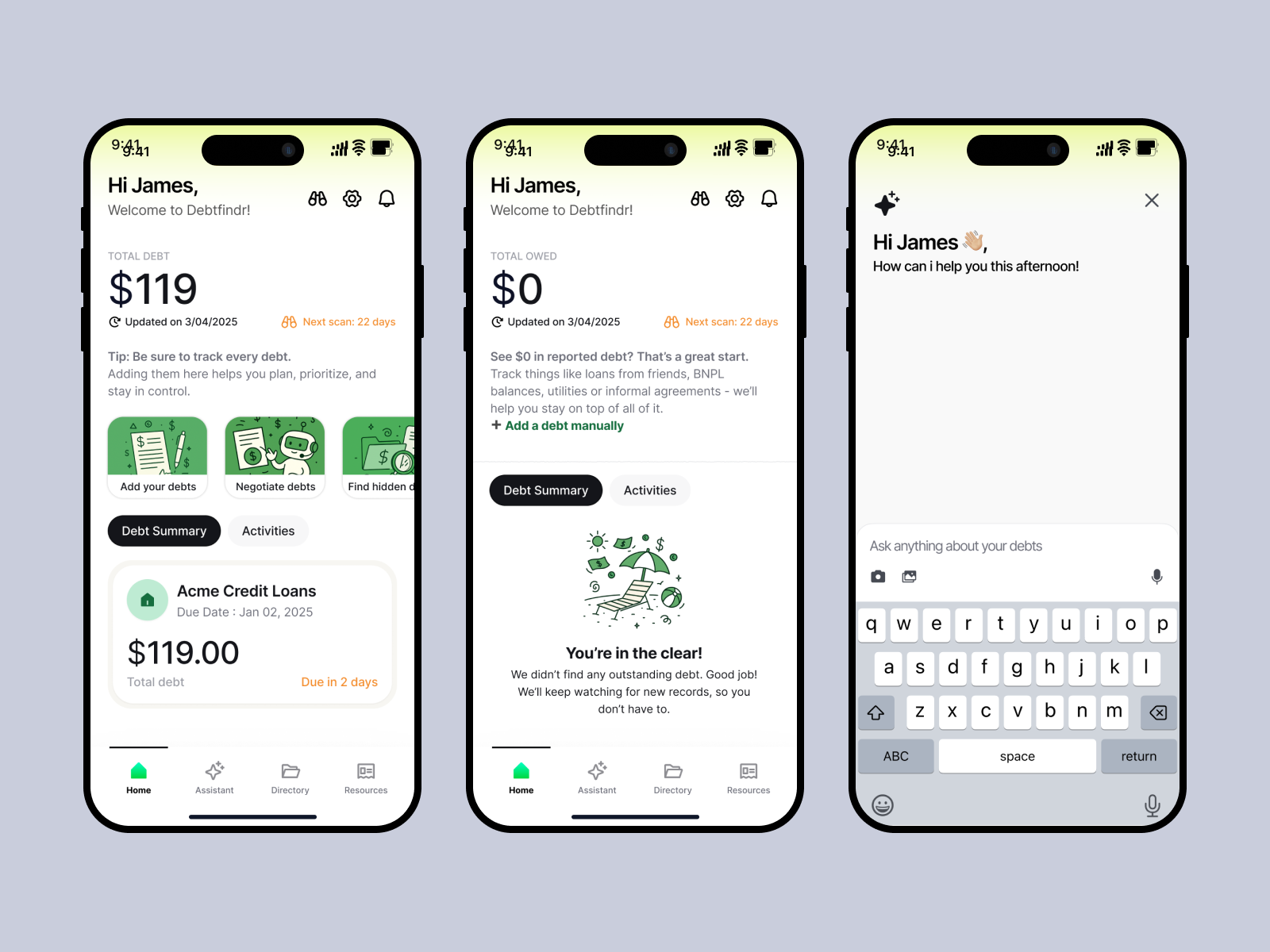
Artificial Intelligence is reshaping how we live, work, and make decisions, but as designers, our responsibility goes beyond efficiency and automation. It’s about ensuring these systems remain deeply human. Over the past decade, my work across fintech and healthcare has focused on building AI experiences that empower people, not replace them.
AI systems can easily become black boxes, making decisions users can’t explain or trust. That’s where Human–AI Interaction Design comes in, crafting experiences where intelligence is transparent, ethical, and grounded in empathy. When users understand how and why a system acts, trust follows.
At PayPal, I led design for the company’s first AI assistant, a conversational system built to simplify complex compliance and support flows. At Debtfindr, my AI-powered debt negotiation platform, I designed a system that helps people navigate financial hardship with clarity and compassion. Despite their different audiences, both shared the same design principle: AI should amplify human judgment, not automate empathy.
Human-centered AI design starts with three commitments:
- Transparency: Users deserve to know how AI makes decisions.
- Empathy: Interfaces should reflect tone and understanding, not just logic.
- Control: People must remain in charge, with AI as their co-pilot.
When we design intelligent systems that put people first, we create technology that doesn’t just work for users, it works with them. The future of AI design isn’t about replacing human decision-making. It’s about giving people new ways to think, act, and thrive with confidence.